
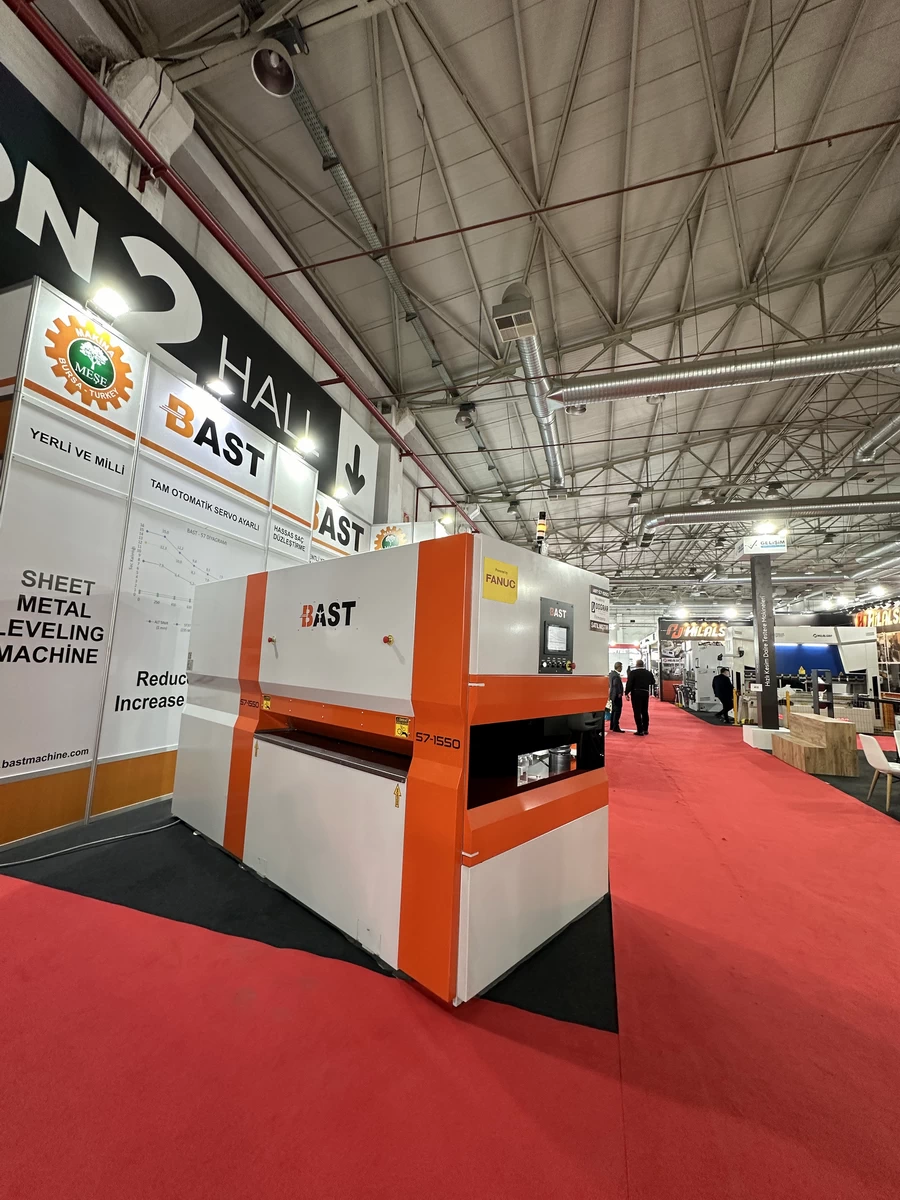
Sheet metal is one of the indispensable materials in modern manufacturing. However, when it undergoes laser cutting, flame cutting, or perforation processes, internal stresses arise. These stresses impair the flatness of the sheet metal and cause problems such as warping, twisting, and bulging.
These irregularities lead to quality losses, dimensional deviations, and higher scrap rates, especially in subsequent processes such as welding, bending, and assembly. Therefore, sheet metal straightening is not just a single step, but a fundamental factor in the overall quality of production.
Typical problems when straightening sheet metal
1. Warping and twisting
High-energy cutting processes such as laser and plasma cutting generate permanent internal stresses in the material. When the part is released, these stresses are released unevenly, causing the sheet metal to warp, bend, or twist. This impairs dimensional accuracy in subsequent processes, causes problems with weld seams and assemblies, and can lead to detection and alignment errors in robot-assisted systems.
2. Surface bulges
If the sheet metal does not lie flat on a base, local bulges may occur, especially in the middle area. This problem often occurs with thin sheets, as the internal stresses are not evenly distributed. In cabin or control cabinet production and in furniture sheet metal, this leads to visual defects and problems with alignment and assembly. After welding, these deformations are exacerbated and require additional time and expense to correct.
3. Lack of precision
Manual or older straightening machines cannot precisely adjust the required pressure to the respective sheet thickness and stress distribution. This means that the results vary depending on the sheet. Repeatability decreases, which means varying quality in each batch. This significantly impairs standardization, especially in assembly lines with tight tolerances.
4. High wear and tear and loss of time
Since the rollers are in constant contact with the metal, they wear out over time—more quickly in inferior machines. In rigid designs, cleaning the rollers is difficult, which causes longer maintenance times and unplanned downtime. In addition, manual adjustments slow down the process and increase the risk of operating errors. All of this leads to productivity losses.
Intelligent solutions from BAST®
1. Stable and repeatable straightening quality
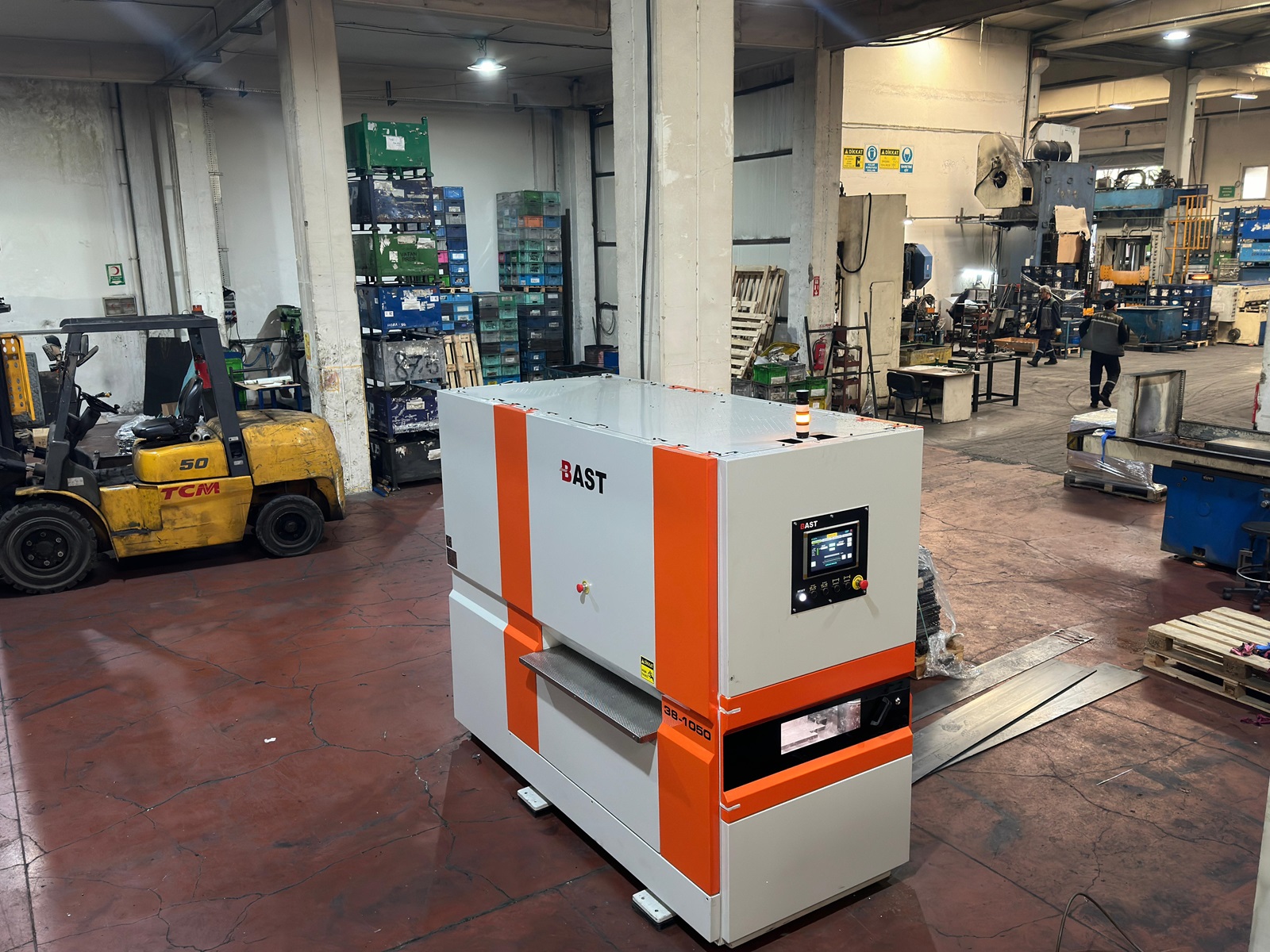
BAST® machines are equipped with a system that precisely adjusts the contact pressure to the sheet thickness and stress distribution. This ensures that uniform and controlled pressure is applied to each part. The result: consistent straightening quality, even with different sheet types, and guaranteed standardization in production.
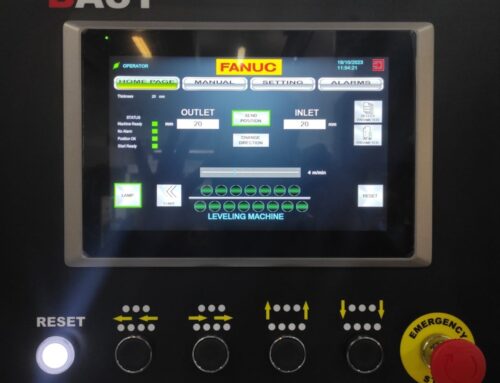
2. Fast and error-free settings with EASYBAST touchscreen
Thanks to the user-friendly touchscreen control, machine settings can be made quickly and easily. The need for manual intervention is reduced and operating errors are minimized. In addition, predefined programs for different sheet metal types can be saved, which significantly reduces changeover times.
3. Rollers that can be used on both sides and easy cleaning
The rollers used in BAST® machines are designed so that they can work on both sides. This slows down wear and tear and extends the service life of the rollers. In addition, the pull-out cassette system above the motorized table facilitates cleaning and maintenance, reducing downtime.
4. Safe working thanks to overload protection
The integrated overload protection system protects both the operator and the machine. As soon as excessive pressure occurs, the system safely shuts down the straightening process. This extends the service life of the machine and reduces the risk of deformation of the rollers.
5. Efficient power transmission for continuous production
Thanks to an optimized drive system, BAST® machines achieve maximum straightening performance with minimum energy consumption. The roller movements are designed to enable high efficiency with low energy consumption – for energy savings and production reliability.
Conclusion: Quality manufacturing begins with the right straightening
For companies in the sheet metal processing industry, straightening is not just a preparatory step, but a strategic element that determines the quality of the entire production process. Thanks to their precise adjustment options, robust construction, and user-friendly operation, BAST® straightening machines offer clear and sustainable solutions to the typical problems encountered during straightening.
Don’t waste any more time with warping, twisting, surface defects, or unplanned downtime.
Make your production more stable, efficient, and sustainable – with technology from BAST®.
Don’t leave quality to chance – take control.


Leave A Comment