
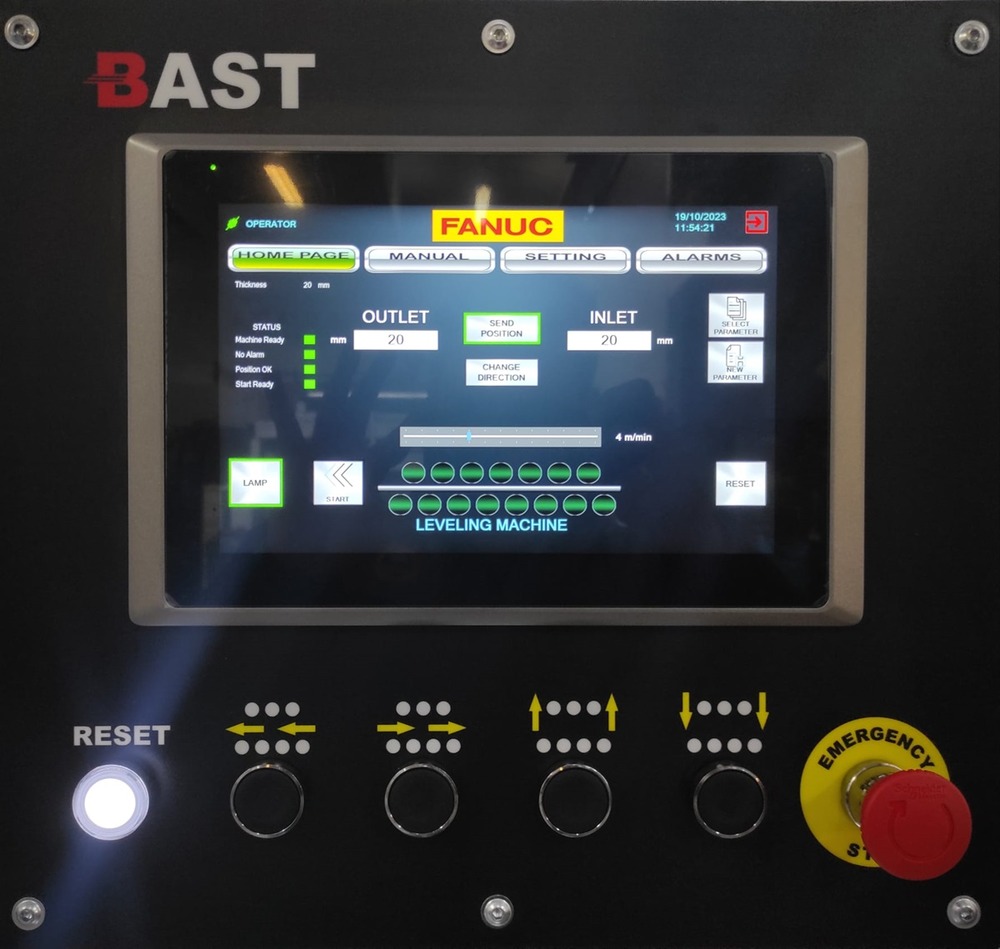
In sheet leveling operations, machine settings directly affect the final result. A small adjustment difference can change how the sheet moves through the rollers, how internal stress is reduced, and how flat and stable the material becomes before the next production stage. For this reason, accurate machine settings are not just a technical detail. They are one of the main factors behind consistent production quality.
In many production environments, sheet leveling is expected to do more than simply correct visible surface defects. It is also expected to prepare the material for later processes such as cutting, bending, welding, and assembly. If the machine settings are not precise enough, the sheet may not reach the required flatness level. This can lead to quality variations in the following operations and make production harder to control.
That is why digital control systems have become more important in modern sheet leveling machines. Instead of relying only on manual intervention, businesses increasingly look for systems that help operators make more controlled, repeatable, and practical adjustments.
Why machine setting accuracy matters
A sheet leveling machine works by applying controlled force through a roller system. The goal is to reduce deformation, improve flatness, and create a more balanced material structure. However, this process depends heavily on how the machine is adjusted.
If the pressure is too low, the sheet may not be leveled sufficiently. If the pressure is too high, new deformation risks may appear. If settings are inconsistent, results may vary from one batch to another. In precision-focused production, this kind of variation can create problems not only in the leveling stage but throughout the production line.
Accurate settings help operators work with more confidence. They also make it easier to maintain process stability, especially when production quality needs to stay consistent over time.
Why touch screen systems make a difference
Touch screen control systems support machine setting accuracy by making adjustments more visible, more practical, and easier to manage. Instead of depending on rough estimation or more limited control methods, operators can work through a clearer and more structured interface.
This improves the process in several ways.
First, it supports precision. When values can be adjusted in more exact ranges, operators have better control over the machine’s working conditions.
Second, it supports consistency. In production, repeatability matters. A machine that can be adjusted in a more controlled way makes it easier to maintain similar results across different jobs or production periods.
Third, it supports usability. When a control system is easier to understand, the operator can respond faster and work more confidently. This is especially valuable in environments where efficiency and stability are both important.
In short, touch screen control is not only about convenience. It is also about creating a more manageable and reliable production process.
The value of digital control in sheet leveling
In sheet leveling, process quality depends on balance. Roller pressure, adjustment precision, and machine response all need to work together. A digital interface can help support this balance because it gives the operator a clearer way to manage the machine.
This becomes even more valuable in operations where flatness quality is critical. If the material will continue to precision cutting, bending, or welding, a more stable leveling result can support the overall quality of the finished part.
For that reason, businesses evaluating a sheet leveling machine should not look only at capacity or power. The control structure also matters. A strong machine becomes more effective when it is paired with a system that allows accurate and stable adjustment.
How BAST Machine supports this approach
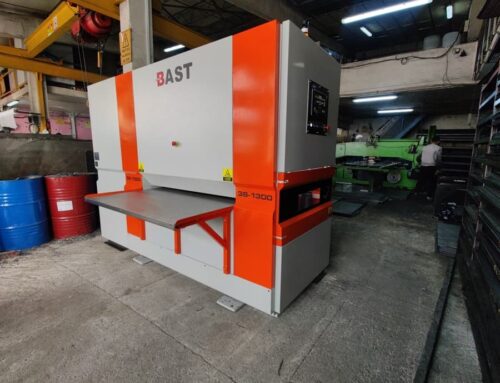
This is the point where BAST Machine’s EASYBAST touch screen becomes relevant. On the BAST Machine website, the EASYBAST touch screen is presented as a system that allows machine settings to be made within precise value ranges while also making the program easier to use. The site also highlights sensitive sensor support for mould cavity adjustment in order to keep the leveling precision process stable.
This positioning is important because it connects machine control directly to production stability. The value of a touch screen system is not only that it looks modern. Its real value is in helping operators manage the machine in a more controlled and practical way.
The same page also presents other supporting features such as overload protection, bi-directional leveling rollers, and a quick-clean mould or cassette structure. Together, these points suggest that the machine is designed not only for sheet leveling performance, but also for easier control, service life, and practical operation.
A more controlled process means a more reliable result
In production, better results often come from better control. A touch screen system helps make that control more accessible. It allows machine settings to be handled more clearly, helps reduce adjustment uncertainty, and supports a more repeatable operating structure.
For businesses that care about flatness quality, process stability, and operational ease, this matters. Because in sheet leveling, the final result is shaped not only by the power of the machine, but also by how accurately the machine can be set and managed.
Conclusion
Touch screen control systems play an important role in improving machine setting accuracy in sheet leveling operations. They support more precise adjustments, easier use, and more consistent production results. That makes them more than a convenience feature. They are part of a more controlled manufacturing approach.
In this context, BAST Machine’s EASYBAST touch screen stands out as a feature that supports precise value-based settings and helps keep the leveling process stable. For businesses looking for both performance and control in sheet leveling, this kind of digital support can make a meaningful difference.


Leave A Comment