
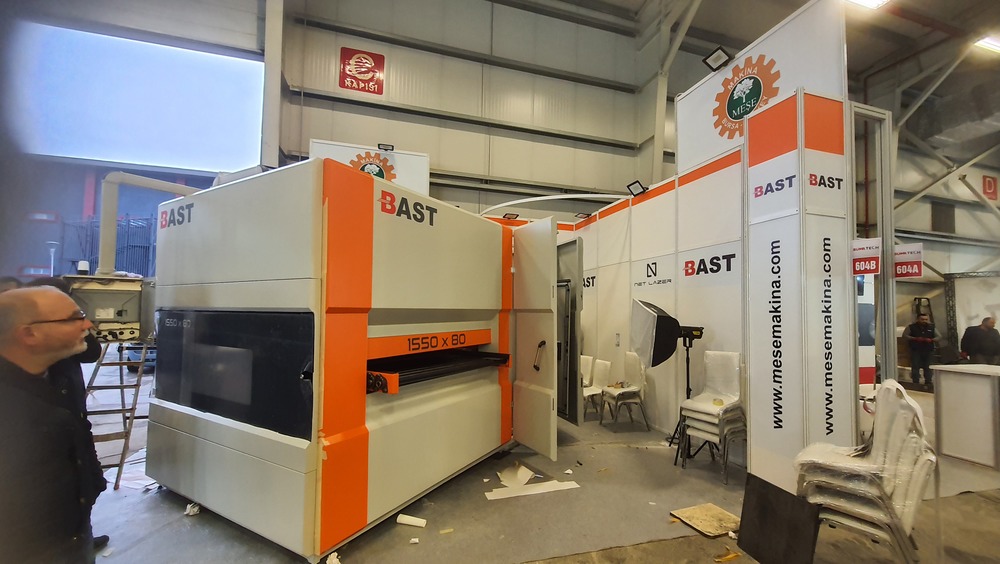
Laser cutting is one of the most accurate and efficient technologies in modern metal fabrication. However, even with advanced laser systems, the cutting process generates heat that creates internal stresses inside the sheet metal. These tensions are often invisible yet significantly impact the dimensional stability of the part.
As a result, laser-cut sheets may experience slight waves, twisting or micro-distortions that become problematic during bending, welding or assembly. When the material is not completely flat, every downstream operation becomes more difficult, less precise and more costly.
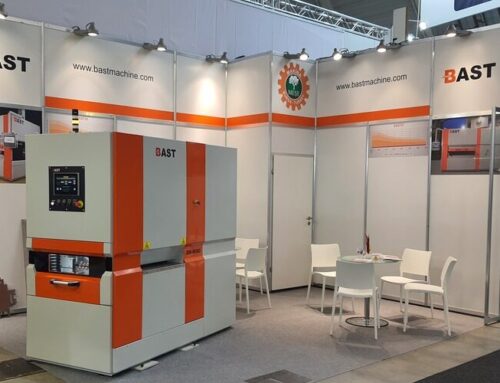
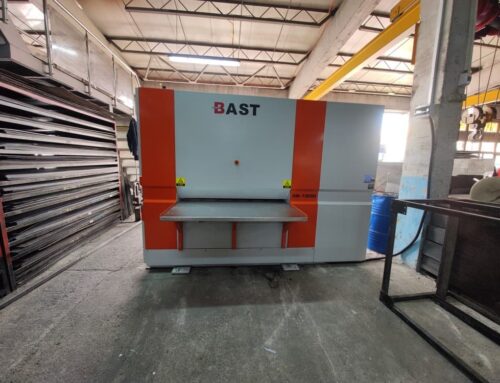
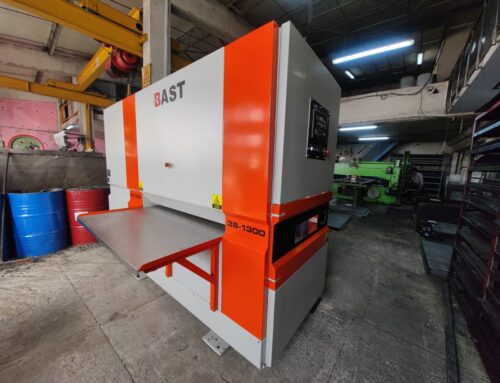
To solve these challenges, manufacturers use sheet leveling machines to restore flatness and stability. The BAST® Sheet Leveling Machine plays a key role here by removing internal stresses, improving surface quality and preparing laser-cut sheets for high-precision production.
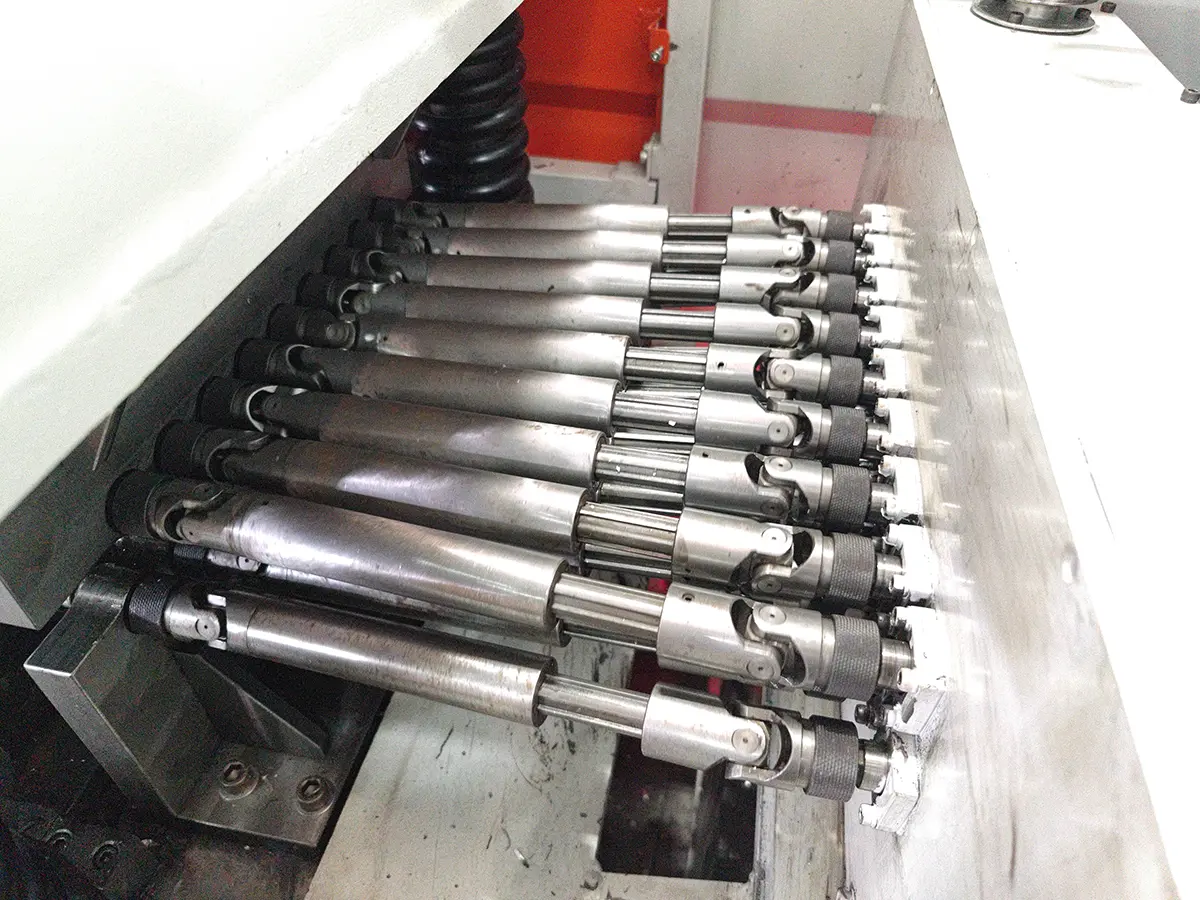
Why Laser-Cut Sheets Require Leveling
Laser cutting generates intense localized heat, causing rapid expansion and cooling in different zones of the sheet. This creates several structural and dimensional issues that make leveling essential. The most common problems include:
Residual Internal Stress: Laser cutting leaves behind internal tension due to uneven heating and cooling. Even if the sheet appears flat, this hidden stress causes unpredictable behavior during bending, forming or welding.
Warping, Twisting and Micro-Distortions: Thermal shock leads to slight bends, waves or twisting across the sheet surface. These defects may be small, but they reduce accuracy in downstream operations.
Unpredictable Springback: Stress-filled sheets do not bend in a consistent manner. The resulting springback varies from part to part, creating angle deviations and reducing repeatability in batch production.
Heat-Affected Zone (HAZ) Effects: The cutting process changes micro-hardness around the edges. While subtle, these variations can affect forming behavior and dimensional stability.
Fit and Assembly Problems: Parts that are not perfectly flat fail to align properly during assembly. Even a few millimeters of distortion can create cumulative tolerance issues, leading to rework or scrap.
Reduced Welding Quality: When sheets contain internal stress, they move or shift slightly during welding. This leads to weaker joints, misaligned components and inconsistent weld bead quality.
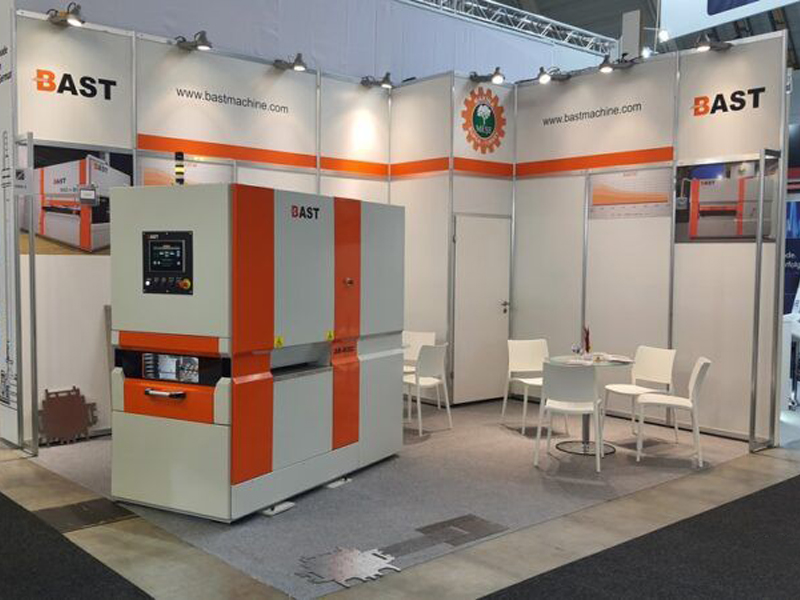
How the BAST® Machine Improves Laser-Cut Part Quality
The BAST® Sheet Leveling Machine relies on an advanced roller leveling mechanism that gradually bends the material back and forth in controlled cycles. This repeated plastic deformation releases internal tension and stabilizes the structure of the sheet.
Key improvements include:
Superior Flatness
By eliminating subtle waves and distortions, BAST® ensures that sheets are perfectly flat across their entire length. This directly enhances bending accuracy, forming results and assembly performance.
Stress Relief for Dimensional Stability
When internal stress is removed, the metal behaves predictably in subsequent processes. This prevents post-cutting twisting or deformation, especially during welding and high-precision forming.
Reduced Scrap and Rework
Because the sheet enters downstream processes in a stable condition, the risk of defects drops dramatically. Manufacturers save on material, time and labor while achieving higher consistency.
In short, BAST® prepares laser-cut sheets for the real world of production—making every step afterward faster, easier and more precise.
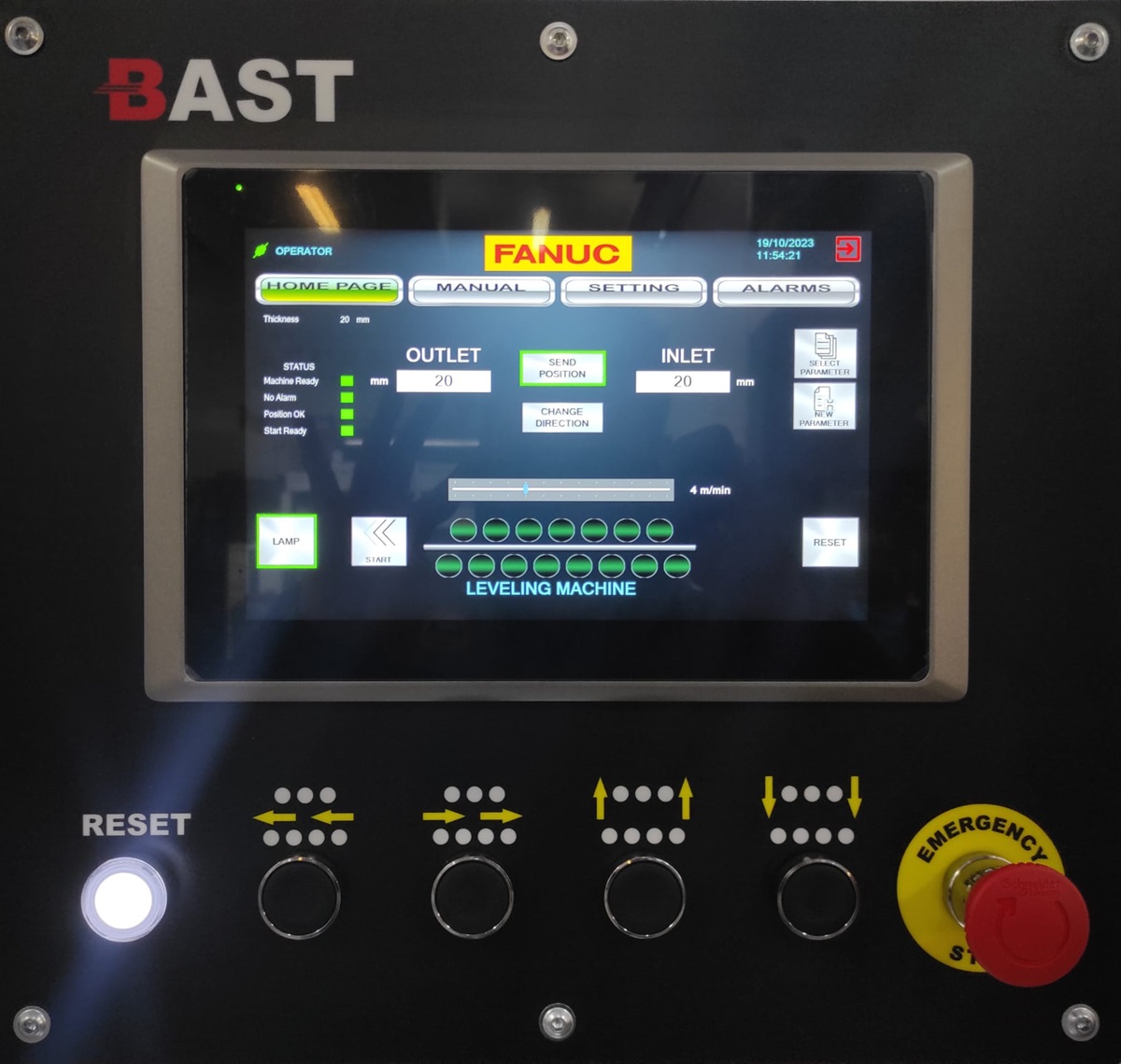
Precision Control: EASYBAST Interface and Fine-Tuning System
Achieving perfect leveling requires more than mechanical strength; it demands accurate control. This is where the EASYBAST touch screen and the machine’s fine-tuning sensors make a significant difference.
The EASYBAST interface allows operators to set leveling parameters with remarkable precision. Thickness values, roller pressure and process direction can be adjusted clearly and intuitively. Even complex settings become easy to manage, reducing the training time required for personnel.
Meanwhile, the sensitive fine-tuning sensors continuously monitor mold cavity positions to maintain stable leveling precision. This combination ensures:
accurate roller alignment
consistent tension relief
repeatable results in serial production
minimal operator error
The result is a highly controlled process that delivers the same quality from the first sheet to the thousandth.
Conclusion
Precision in laser cutting is only the beginning. True part quality comes from controlling internal stresses and ensuring that sheets remain dimensionally stable throughout the production process. The BAST® Sheet Leveling Machine delivers this stability with advanced engineering, intelligent control systems and durable mechanical design.
For manufacturers who demand reliable performance, reduced scrap rates and smoother workflows, BAST® is not just an additional machine—it is a key investment in higher production standards and long-term efficiency.



Leave A Comment